Technogym Elliptical & Cross Trainers: What to Know Before You Buy
Full-body, low-impact cardio built for commercial floors — here's what to know about Technogym ellipticals and cross trainers before you buy.
Technogym Elliptical for Sale
1. Technogym's Elliptical and Cross-Trainer Lines
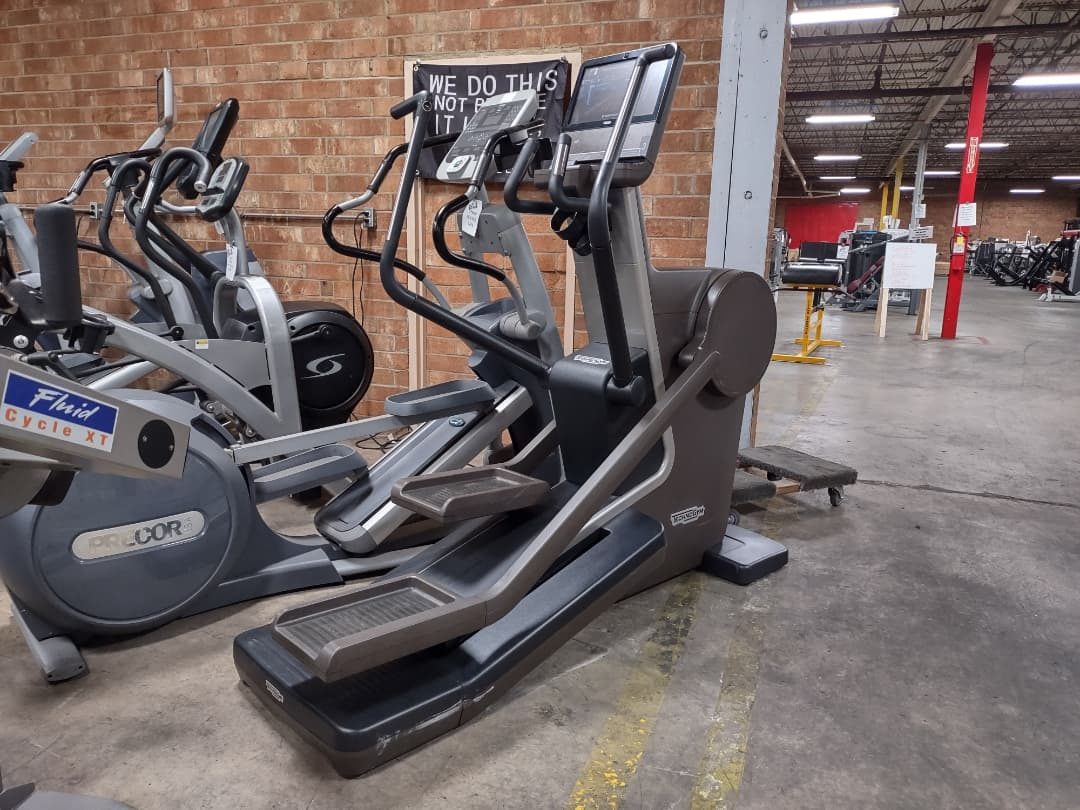
Technogym has built several elliptical and cross-trainer product families over the years — names like Excite, Synchro, Vario and Crossover have all appeared in its cardio lineup at different points, alongside its more design-focused Artis line. Our current listing is a Technogym elliptical built for commercial full-body cardio use, the same category of machine that's made the brand a fixture on commercial gym floors.
View Technogym Equipment2. Elliptical vs. Cross Trainer: Is There a Real Difference?
The terms get used almost interchangeably, and in practice there's a lot of overlap — both describe a low-impact machine that moves your feet through an elliptical (oval) path rather than a fixed pedal circle. Where a distinction shows up is usually in features: machines marketed as 'cross trainers' more often add moving arm handles for upper-body engagement and sometimes more incline or stride adjustability, while 'elliptical' more often describes a simpler, fixed-stride, lower-body-focused design. Neither term is used with perfect consistency across brands, so it's worth checking a specific listing's features rather than assuming based on the name alone.
3. Why Choose an Elliptical Over a Treadmill or Bike
An elliptical splits the difference between a treadmill's higher impact and a bike's more limited muscle engagement — it trains the legs through a full range of motion with essentially no impact, and models with moving handles add upper-body work a treadmill or bike can't replicate. That combination makes it a common pick for anyone managing joint issues, recovering from injury, or simply wanting a lower-impact cardio option that still engages more muscle mass than cycling alone.
Read: Cardio Equipment Compared4. Stride Length and Fit
Stride length — how far the pedal travels front to back — affects how natural the motion feels, and it matters more for taller users than shorter ones. A stride that's too short can feel cramped and unnatural at the top of the motion, while a longer stride generally accommodates a wider range of user heights comfortably. Check the specific listing's stride length rather than assuming one elliptical's fit applies to another, especially if the machine will see use from people of noticeably different heights.
5. New vs. Used Technogym Ellipticals
Technogym builds its cardio equipment for continuous, multi-user commercial traffic, which is exactly why a well-maintained used unit is often a strong value — the same durability that lets it survive a busy gym floor tends to carry over comfortably to a much lighter home or small-studio training load.
Read: New vs. Used Gym Equipment6. What to Check Before Buying a Used Elliptical
Ellipticals have more moving parts than most strength equipment, so a used unit deserves a specific inspection pass. Cycle the pedals through several full rotations checking for smooth, quiet movement without clicking, grinding or resistance that surges unevenly. Check the pedal arms and stride rail for excessive play or wobble, confirm the console powers on and tracks basic metrics, and inspect the resistance mechanism — most modern ellipticals use magnetic or eddy-current resistance rather than physical brake pads, so listen for unusual noise rather than looking for visible wear.
- Pedals cycle smoothly through full rotations without clicking or grinding
- Pedal arms and stride rail show no excessive play or wobble
- Console powers on and tracks basic metrics correctly
- Resistance changes smoothly across levels without sudden surges or dead spots
7. Common Mistakes When Buying an Elliptical
Overlooking footprint is one of the most common regrets — an elliptical's stride motion extends beyond its resting dimensions, so measuring only the base footprint underestimates the clearance actually needed to use the machine comfortably. Skipping a hands-on test of the resistance range is another: a machine that tops out too easily for a stronger user, or that can't go light enough for a beginner or someone recovering from injury, won't get consistent use regardless of how well-built it is. Buying based on brand name alone, without checking the specific model's stride length and moving-handle setup against who will actually use it, rounds out the most avoidable mistakes.
- Measuring only the resting footprint instead of the full stride clearance needed
- Not testing the resistance range against the actual users' fitness levels
- Choosing by brand name alone without checking stride length and handle setup
8. Elliptical Machines in a Home Gym
A single elliptical is one of the more space-efficient full-body cardio options for a home gym — it doesn't fold the way some treadmills do, but its footprint stays constant rather than needing extra clearance for a running stride the way a treadmill does. A used commercial elliptical brings the same durability advantage to a home setting that applies across other commercial equipment categories, at the cost of a larger, heavier machine than most home-grade alternatives.
Read: Home Gym Equipment for Sale9. Where an Elliptical Fits in a Cardio Lineup
On a commercial floor, ellipticals typically sit alongside treadmills, bikes and rowers rather than replacing them — each machine serves a different joint-impact and muscle-engagement profile, and offering a mix lets members choose based on preference or physical limitations rather than settling for whatever's available. For a smaller setup with room for only one or two cardio pieces, an elliptical's low-impact, full-body profile makes it a reasonable default pick when you're not sure which single machine will get used most consistently.
Shop Cardio Equipment10. Where to Find a Technogym Elliptical for Sale
Cardio inventory rotates as listings come and go, so it's worth checking current cardio equipment listings directly rather than searching for one specific model or line.
Shop Cardio EquipmentFinal Thoughts
A Technogym elliptical brings the same commercial-grade durability the brand is known for to a low-impact, full-body cardio option. Whether you're comparing elliptical vs. cross trainer terminology, checking stride length, or deciding between new and used, focus on the machine's actual mechanics — pedals, console, resistance — over the model name or line alone.
Frequently Asked Questions
- What's the difference between an elliptical and a cross trainer?
- The terms overlap heavily, but 'cross trainer' more often implies moving arm handles for upper-body engagement and sometimes more stride or incline adjustability, while 'elliptical' more often describes a simpler, fixed-stride design. Check the specific listing's features rather than assuming based on the name.
- What elliptical and cross-trainer lines has Technogym made?
- Technogym has offered several product families over the years, including names like Excite, Synchro, Vario and Crossover, alongside its design-focused Artis line.
- Is a Technogym elliptical good for a home gym?
- It can be — a single elliptical is a space-efficient, low-impact full-body cardio option, and a used commercial unit brings durability advantages to a home setting, at the cost of a larger footprint than most home-grade alternatives typically have.
- What should I check before buying a used elliptical?
- Cycle the pedals through full rotations checking for smooth, quiet movement, check the pedal arms and stride rail for excessive play, confirm the console works, and listen for uneven resistance changes.
- Does stride length matter when choosing an elliptical?
- Yes — it affects how natural the motion feels, especially for taller users. A stride that's too short can feel cramped, so check the specific listing's stride length against who will actually use the machine.
- Is an elliptical better than a treadmill for joint impact?
- Generally, yes — an elliptical trains the legs through a full range of motion with essentially no impact, making it a common choice for anyone managing joint issues or recovering from injury.
- Does Technogym still make elliptical and cross-trainer equipment?
- Yes — Technogym remains an active commercial fitness equipment manufacturer, and cardio equipment including ellipticals is part of its current and historical lineup.
- What footprint does an elliptical actually need?
- More than its resting dimensions suggest — the stride motion extends beyond the base footprint, so measure with the machine in use rather than just its parked measurements.
- Do ellipticals with moving arm handles work the upper body effectively?
- They add real upper-body engagement compared to a lower-body-only elliptical, though the intensity depends on how much you actively push and pull the handles rather than letting your legs do all the work.
- How does an elliptical's resistance system typically work?
- Most modern ellipticals use magnetic or eddy-current resistance rather than physical brake pads, which means there's little visible wear to inspect directly — listen for smooth, consistent resistance changes instead.
Shop Related Equipment
Ready to Shop Technogym Cardio Equipment?
Browse ellipticals and other cardio equipment from verified sellers.