Best Gym Equipment Brands for a Commercial Gym
Big-box gym, boutique studio, hotel or university facility — here's how to match a commercial gym equipment brand to your specific facility and member base.
Commercial Gym Equipment for Sale
1. What Makes a Brand 'Commercial-Grade'
Commercial-grade equipment is built around a duty cycle — continuous, multi-user traffic for years at a time — rather than the light, occasional use a home gym puts equipment through. Six brands dominate commercial floors for this reason: Life Fitness, Precor, Technogym, Cybex, Matrix and Hammer Strength. All six have strong parts networks, which matters more day-to-day than brand preference once a machine actually needs service.
Compare All Brands2. The Six Major Commercial Brands at a Glance
| Brand | Known For |
|---|---|
| Life Fitness | Broad cardio and strength lineup, widely used across health clubs and corporate gyms |
| Precor | Pioneering cardio equipment, including some of the earliest commercial ellipticals |
| Technogym | Design-led equipment for luxury clubs, hotels and boutique studios |
| Cybex | Biomechanically researched strength machines, common in university and hospital settings |
| Matrix Fitness | Durable, quiet cardio and strength equipment suited to apartment and hotel gyms |
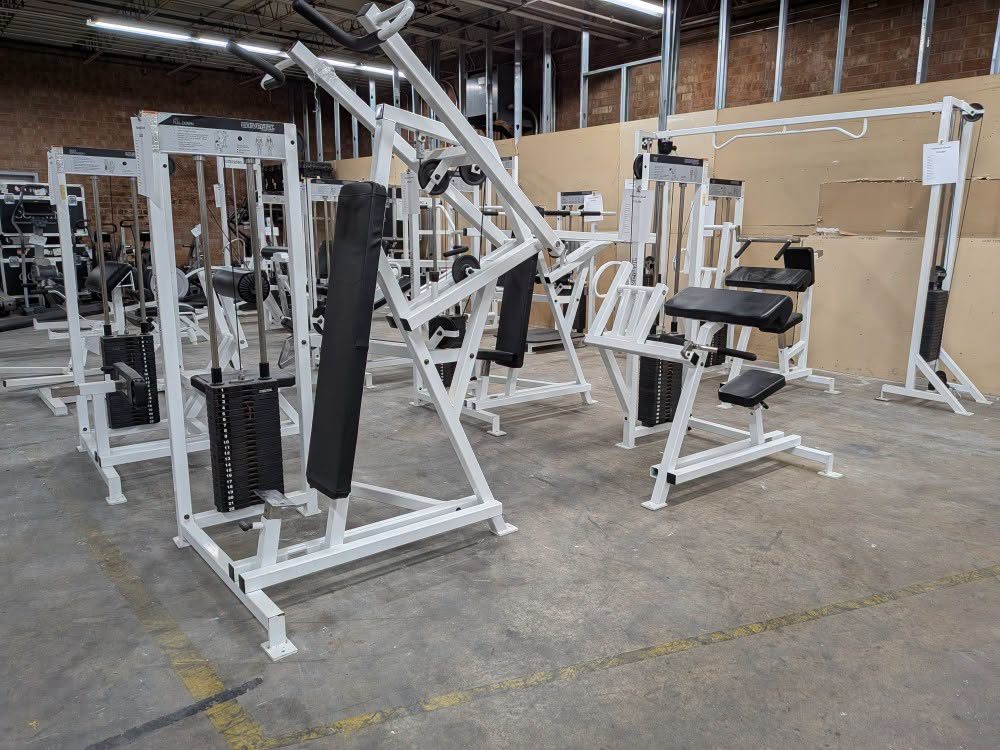
| Hammer Strength | Heavy plate-loaded machines built for serious strength-training floors |
3. Choosing a Brand by Facility Type
The right brand mix shifts noticeably depending on what kind of facility you're outfitting, since each brand's reputation was built serving a slightly different type of floor.
- Big-box or general commercial gym — Life Fitness or Precor for a broad, proven cardio and strength lineup
- Boutique or luxury studio — Technogym for design-led equipment where presentation matters as much as function
- Hotel or apartment fitness room — Matrix Fitness for compact, quiet, low-maintenance cardio and strength
- University, hospital or institutional gym — Cybex for biomechanically researched, heavy-use strength machines
- Strength-focused training floor — Hammer Strength for heavy, plate-loaded machines built for serious loading
4. Mixing Brands on One Commercial Floor
Few commercial gyms run a single brand across the entire floor, and there's no real downside to mixing — a facility might run Life Fitness or Precor cardio alongside Hammer Strength plate-loaded machines for the strength area, since each brand was chosen for what it does best rather than for consistency's sake. The main practical consideration is service: mixing brands means coordinating maintenance and parts across more than one manufacturer, which is a manageable trade-off most facilities accept for better-fit equipment.
Read: Gym Equipment Maintenance Guide5. Parts Support and Long-Term Service
All six major commercial brands maintain active parts networks, which matters more over the equipment's lifespan than brand preference alone — a machine that goes down without available parts becomes a wasted floor space regardless of how good the brand's reputation is. This is one of the more practical reasons commercial buyers tend to stick to established, active manufacturers rather than discontinued or niche brands, even when a used unit's upfront price looks appealing.
6. How Facility Size Changes the Brand Calculus
A small boutique studio or apartment gym typically buys a handful of machines from one or two brands, which makes consistency in look, feel and maintenance easier to manage than it would be at scale. A large multi-floor facility, by contrast, often runs several brands simultaneously by design — a broad cardio lineup from Life Fitness or Precor across the main floor, Hammer Strength in a dedicated strength area, and Cybex or Matrix filling out specialty stations — because no single brand's full catalog is the strongest choice in every category at once.
7. Common Mistakes When Choosing a Commercial Brand
The most frequent mistake is choosing a brand based on reputation alone without matching it to the facility's actual use case — a boutique studio outfitted entirely in heavy-duty Hammer Strength plate-loaded machines, for example, may be overbuilt and space-inefficient for programming that doesn't need that much loading capacity. The second common mistake is underweighting parts support and service history in favor of price alone, which tends to cost more over the equipment's lifespan than it saves upfront.
- Choosing a brand by reputation without matching it to the facility's actual programming
- Underweighting parts support and service availability in favor of upfront price
- Assuming one brand must cover every equipment category on the floor
8. New vs. Used for a Commercial Buildout
New equipment carries full warranty coverage and no wear history, which matters more for a facility expecting immediate, heavy use from day one. Used commercial equipment — often coming from a facility upgrade or closure — can meaningfully lower buildout costs across all six brands, since commercial-grade construction is specifically engineered to hold up well even after years on an active floor.
Read: New vs. Used Gym Equipment9. Budgeting a Commercial Gym Buildout
Brand is one factor in a commercial buildout budget, but it's rarely the biggest one — facility size, new-vs-used mix and equipment category (cardio typically costs more than strength per unit) tend to move the total more than choosing one commercial brand over another.
Read: How Much Does It Cost to Open a Gym?10. Evaluating Brand Fit Before You Buy
Before committing to a brand for a category, it's worth confirming the fit against your actual member base and programming rather than assuming a well-known name automatically suits every facility. A boutique studio running mostly bodyweight and light-resistance classes has little use for Hammer Strength's heaviest plate-loaded machines, just as an apartment gym rarely needs Cybex's institutional-grade strength lineup built for a university's constant traffic. Matching the brand's actual strength to your floor's actual use case matters more than the brand's general commercial reputation.
11. Shop Commercial Gym Equipment by Brand
Brand availability rotates as listings come and go, so browse current commercial gym equipment directly, or check a specific brand's page for what's currently in stock.
Shop Commercial Gym EquipmentFinal Thoughts
There's no single best commercial brand — Life Fitness, Precor, Technogym, Cybex, Matrix and Hammer Strength each built their reputation serving a slightly different type of facility. Match the brand to your specific floor and member base, mix brands where it makes sense, and weight parts support and duty cycle as heavily as the brand name itself.
Frequently Asked Questions
- What's the best gym equipment brand for a commercial gym?
- There isn't one best brand — Life Fitness, Precor, Technogym, Cybex, Matrix and Hammer Strength all build commercial-grade equipment, and the right one depends on your facility type and whether you're prioritizing cardio, strength or a specific setting like a boutique studio.
- What's the best gym equipment brand for a boutique studio?
- Technogym is a common choice, known for design-led equipment used across luxury clubs, hotels and boutique studios where presentation matters alongside function.
- What's the best gym equipment brand for a hotel or apartment gym?
- Matrix Fitness is a strong fit — its cardio and strength equipment is known for being compact, quiet and low-maintenance, which suits unstaffed hotel and apartment fitness rooms.
- What's the best gym equipment brand for a university or hospital gym?
- Cybex is commonly used in these settings, known for biomechanically researched strength machines built for heavy, continuous institutional use.
- Can I mix gym equipment brands on one commercial floor?
- Yes — most commercial gyms mix brands, choosing each one for what it does best. The main trade-off is coordinating maintenance and parts across more than one manufacturer.
- Does parts support matter more than brand reputation?
- In practice, yes — a machine that goes down without available parts becomes wasted floor space regardless of brand reputation, which is why established, active manufacturers are generally the safer commercial choice.
- Should a commercial gym buy new or used equipment?
- Both are common — new equipment suits facilities expecting immediate, heavy use with full warranty coverage, while used commercial equipment can meaningfully lower buildout costs since it's engineered to hold up well even after years of continuous use.
- Do smaller commercial gyms need the same brands as large facilities?
- Not necessarily — a small boutique studio or apartment gym can often stick to one or two brands for consistency, while a larger facility more often mixes brands across different equipment categories.
- Does a commercial gym need to stick to one brand?
- No — most commercial gyms mix brands by design, choosing each one for the equipment category it's strongest in rather than committing to a single manufacturer's full catalog across the whole floor.
- How does facility size affect which brand to choose?
- Small studios and apartment gyms generally benefit from consistency across one or two brands, while larger multi-floor facilities more often mix several brands by design, since no single catalog is the strongest choice in every equipment category.
- What's the biggest mistake facilities make when choosing a commercial brand?
- Choosing based on reputation alone without matching the equipment to actual programming needs, and underweighting parts support and service availability in favor of a lower upfront price.
Shop Related Equipment
Ready to Outfit Your Commercial Gym?
Browse commercial gym equipment by brand and find the right fit for your facility.