Commercial Gym Equipment for Sale: A Buyer's Guide for Gyms & Fitness Studios
What separates commercial-grade equipment from home-grade, how gym owners source full packages, and how to plan a purchase from single machines to full fit-outs.
Commercial Gym Equipment for Sale
1. What Makes Equipment Commercial-Grade
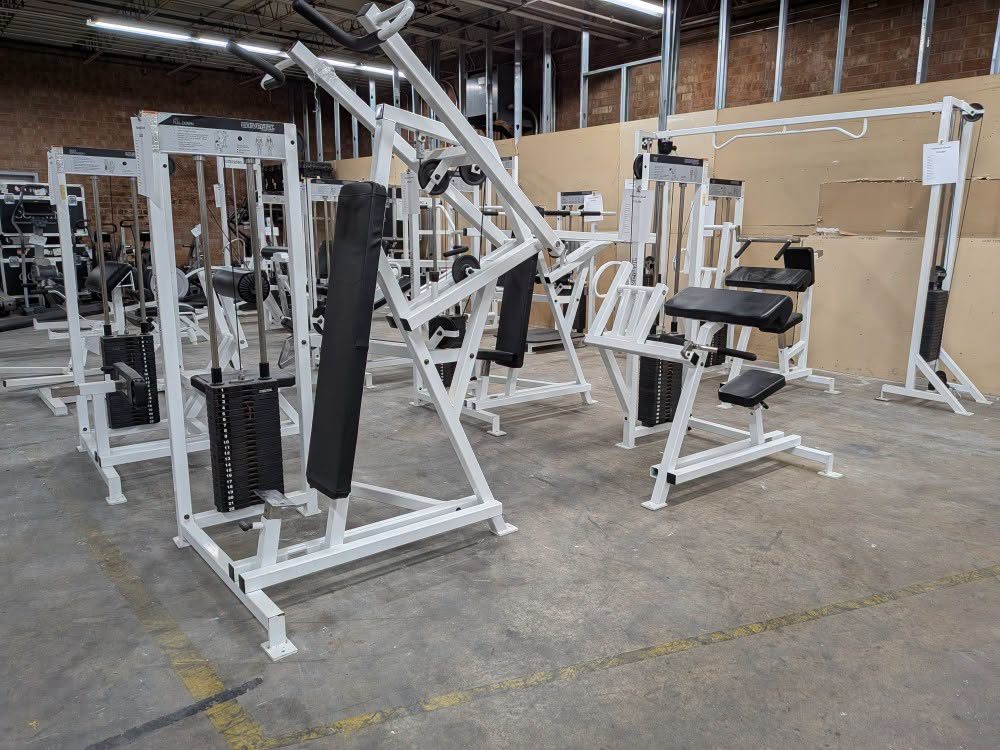
Commercial equipment is engineered for a duty cycle home equipment was never designed for: continuous use by many different users, all day, for years. That shows up as heavier steel frames, industrial-grade bearings and cables, and warranty terms written around commercial, not residential, use.
It's also why commercial equipment tends to hold resale value better than home-grade alternatives — the build quality that survives a gym floor keeps working long after it's sold on.
2. How Long Commercial Equipment Is Actually Expected to Last
Because commercial machines are built around a heavier duty cycle, the equipment itself often outlives the flooring, paint and branding around it. Cardio consoles, belts and upholstery tend to wear fastest under continuous member use, while the frame, rails and welded joints on strength equipment are usually the last thing to fail — which is exactly why so much used commercial gear still has years of service left in it when a facility upgrades or closes.
A basic maintenance routine — cleaning and lubricating moving parts, checking belts and cables, tightening hardware on a schedule — extends that lifespan further and is worth budgeting for as an ongoing cost, not a one-time afterthought, once the equipment is on your floor.
Read: Gym Equipment Maintenance Guide3. Full Gym Packages vs. Individual Machines
Opening or refreshing a facility usually comes down to choosing between a full equipment package — a pre-matched mix of cardio, strength and free weight equipment sized to the space — or building the floor machine by machine. Packages save time and often cost less than buying the same equipment piecemeal; buying individually gives more control over brand and layout.
View Commercial Gym Equipment4. Budgeting: Single Machines, Packages & Full Build-Outs
How you buy changes how the budget breaks down. A single replacement machine is a straightforward, one-line cost. A full equipment package bundles cardio, strength and free weights into one quote, which is typically easier to plan around than sourcing each piece separately, though it commits you to that mix up front. A full build-out — a new facility from the ground up — adds flooring, mirrors, sound and HVAC considerations on top of the equipment itself, and those surrounding costs are easy to underestimate next to the machines themselves.
- Single machine — replace or add one piece to an existing floor
- Full package — a pre-matched cardio, strength and free weight mix
- Full build-out — equipment plus flooring, mirrors and facility fit-out
5. Sourcing Options: Dealers, Wholesalers & Direct Sellers
Gym owners typically source larger purchases directly from a dealer or supplier rather than one listing at a time, especially for full packages. Ask about lead times on new equipment, whether installation and old-equipment removal are included, and how service and replacement parts are handled after the sale.
6. Equipment for Specific Facility Types
Hotels, schools, apartment buildings, corporate offices, personal training studios and boutique fitness studios each have different equipment priorities — from quiet operation near guest rooms to safety-enclosed stacks for supervised group use.
- Hotel Gym Equipment — compact, quiet, low-maintenance
- School Gym Equipment — durable, safety-focused for group and supervised use
- Apartment Gym Equipment — simple, quiet, hard to break for unstaffed resident gyms
- Corporate Gym Equipment — reliable, balanced cardio and strength for mixed-ability teams
- Personal Training Equipment — versatile, space-efficient for one-to-one training
- Fitness Studio Equipment — boutique packages for cycling, HIIT and small-group formats
7. New vs. Used Commercial Equipment
Used commercial machines are frequently a smart buy precisely because they're overbuilt: a well-maintained used unit can outlast new home-grade equipment sold at the same price, which is why many gym owners deliberately mix refurbished strength equipment into a first-phase build-out.
Compare New vs. Used Commercial Equipment8. Financing and Leasing Commercial Equipment
Few gym owners pay cash for a full equipment package outright, and suppliers who deal regularly with commercial buyers are generally set up to offer financing or leasing terms rather than a single upfront invoice. Leasing can lower the initial cash outlay and make it easier to refresh equipment on a set cycle, while financing a purchase builds equity in equipment you own outright once it's paid off.
Whichever route fits your situation, ask a potential supplier directly about the terms, the length of the agreement, and what happens to the equipment at the end of it — those details vary more between suppliers than the headline price does.
9. Planning Your Purchase
Space planning, equipment mix and budget all interact — get the sequence wrong and you either overspend on day one or run out of floor space for the machines members actually use most. If you're planning a full facility, it's worth working through the space, budget and phasing questions before requesting quotes.
Read: How to Build a Commercial Gym10. Common Mistakes When Buying Commercial Equipment
Facility owners who overspend or under-plan tend to trip on the same handful of issues. Buying every station a catalog offers before knowing which ones members actually use crowds a floor with underused machines and leaves no budget for the popular ones. Skipping delivery and installation logistics until after ordering is another — a plate-loaded machine or full rack system that won't fit through a doorway or down a stairwell becomes an expensive problem on delivery day, not before.
Underestimating ongoing maintenance is the third recurring mistake. Commercial equipment is durable, but it isn't maintenance-free, and a facility that doesn't budget time and money for basic upkeep will see failures sooner than the equipment's build quality would otherwise allow.
- Overbuying stations before knowing which ones members actually use
- Not confirming delivery access — doorways, stairwells, freight elevators — before ordering
- Treating maintenance as an afterthought instead of an ongoing budget line
Final Thoughts
Commercial equipment is a longer-term investment than home gear, so it pays to plan the space, budget and sourcing before you buy. A well-chosen mix of new and used commercial machines usually outperforms rushing to fill a floor.
Frequently Asked Questions
- What's the difference between commercial and home gym equipment?
- Commercial equipment is built with heavier frames and components rated for continuous, multi-user use and typically carries a commercial warranty; home equipment is designed for lighter, single-household use.
- Should I buy new or used commercial equipment?
- Both can be right depending on budget and timeline. Used commercial machines are built for thousands of hours of use, so a well-maintained unit often outlasts new home-grade equipment at a similar price.
- Can I buy a full gym package instead of individual machines?
- Yes — full gym packages bundle a matched mix of cardio, strength and free weight equipment, which is typically faster and simpler than sourcing every machine separately.
- Do sellers help with delivery and installation for commercial orders?
- Many do — ask specifically whether shipping, installation and old-equipment removal are included in a quote before you buy.
- How long does commercial gym equipment typically last?
- Frames and welded components on strength equipment are usually the last parts to fail, while cardio consoles, belts and upholstery wear fastest — which is why a well-maintained used commercial machine often still has years of service left.
- Can I finance or lease commercial gym equipment?
- Yes — most suppliers who work with gym owners offer financing or leasing options rather than requiring a single upfront payment. Ask directly about terms, contract length and what happens to the equipment at the end of the agreement.
- What's the biggest mistake gym owners make when buying equipment?
- Overbuying stations before knowing which ones members actually use, and not confirming delivery access — doorways, stairwells or freight elevators — before ordering large equipment.
- How do I know how much commercial equipment my facility needs?
- Start from expected member traffic and the space itself rather than a target machine count — most facilities do better opening with the equipment members will use most and phasing in specialty machines once real usage patterns are known.
- What's the difference between buying commercial equipment and a home multi-gym?
- Commercial equipment is built and warrantied for continuous, multi-user traffic and is typically sourced through a dealer or supplier for larger orders, while home equipment is sized, priced and warrantied for lighter single-household use.
- How far in advance should I order commercial equipment before opening?
- Lead times vary by equipment type and whether it's new or used — used and refurbished packages typically ship faster than new commercial orders, which is often the deciding factor for a tight opening timeline.
Shop Related Equipment
Ready to Outfit Your Facility?
Browse commercial gym equipment and full packages for gyms, studios and fitness centers.