
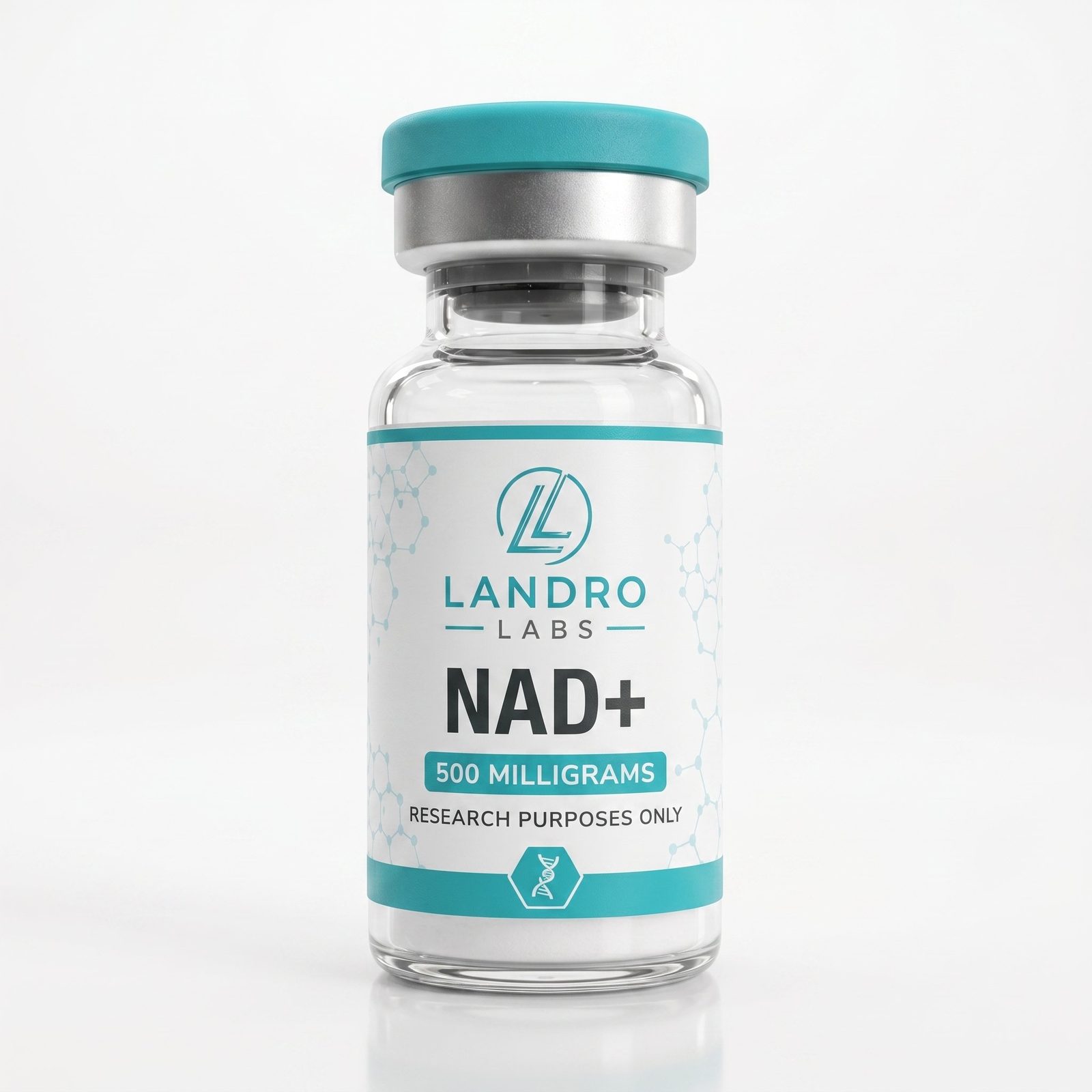
NAD+ Explained: What It Is, Research on Aging and Energy, and Safety
NAD+ is essential to every cell. Here's what it does, what longevity research does and doesn't show, and what to know before believing the hype.
NAD+ for Research
1. What Is NAD+?
NAD+ (nicotinamide adenine dinucleotide) is a coenzyme found in every living cell. It isn't a peptide, but it's often sold alongside them. NAD+ helps convert food into energy and supports enzymes involved in DNA repair and cell signaling, including the sirtuins that feature heavily in aging research.
2. Why NAD+ Gets So Much Attention
Studies show NAD+ levels tend to decline with age, and raising NAD+ in animals has improved several markers of metabolic health. That has made NAD+ and its precursors, such as nicotinamide riboside (NR) and nicotinamide mononucleotide (NMN), a major focus of longevity research.
3. What Human Research Shows
Human studies of NAD+ precursors show they can raise NAD+ levels in the blood. Whether that translates into meaningful benefits for energy, aging or disease in healthy people is still unclear, with mixed and mostly small trials. Direct NAD+ injections and infusions have even less published evidence.
| Form | Evidence So Far |
|---|---|
| Oral precursors (NR, NMN) | Raise NAD+ levels; clinical benefits still unclear |
| IV or injectable NAD+ | Limited published human research |
| Animal studies | Promising metabolic effects that may not translate to humans |
4. Safety Considerations
- Infusions are commonly reported to cause flushing, nausea and discomfort when given quickly
- Long-term effects of raising NAD+ are not well studied
- Researchers are investigating whether NAD+ could affect cancer cell growth
- Research-grade injectable products are not FDA-approved and quality varies
5. Evaluating NAD+ Products
NAD+ products range from oral precursors to clinic-administered infusions, and the quality of evidence differs widely between them. Look for products with transparent labeling and independent testing, be cautious of strong anti-aging claims, and talk to a healthcare provider before starting, especially if you take medications or have a medical condition.
6. Lifestyle Factors That Affect NAD+
Research suggests NAD+ levels decline with age and may be influenced by exercise, sleep and overall metabolic health. Regular physical activity remains one of the best-supported ways to support healthy aging.
7. Bottom Line
NAD+ research is promising but still developing. Be skeptical of dramatic claims and prioritize proven habits like exercise, sleep and good nutrition.
Final Thoughts
NAD+ is essential for cellular energy, and declining levels with age make it a fascinating research target. But human evidence for benefits from supplementing it, especially by injection, is still limited. Follow the research rather than the marketing. This article is for general information only and is not medical advice. The compounds discussed are not approved by the FDA for human use and are sold for research purposes only. Talk to a licensed healthcare provider before making any decision about your health.
Frequently Asked Questions
- Is NAD+ a peptide?
- No. NAD+ is a coenzyme, not a peptide, but it's often sold alongside research peptides.
- Do NAD+ levels decline with age?
- Research suggests they do, which is why NAD+ is a focus of aging research.
- Does NAD+ slow aging?
- That hasn't been shown in humans. Precursors raise NAD+ levels, but clinical benefits are still being studied.
Shop Related Equipment
NAD+ for Research
Factory-sealed NAD+ for laboratory research. Not for human consumption.