Lateral Raise Machine for Sale: Standing vs. Seated, and Machine vs. Dumbbell
Standing or seated, machine or dumbbell — here's how to choose a lateral raise machine and get real side-delt results from it.
Lateral Raise Machines for Sale
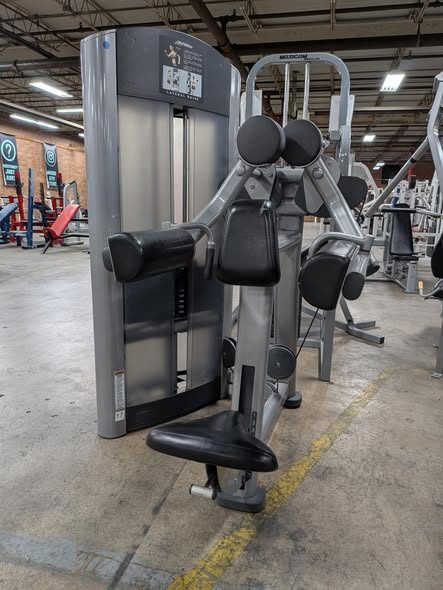
Life Fitness
Life Fitness Lateral Raise Machine
Condition: Very Good
$899
Los Angeles, California
View Details1. Why Lateral Raise Machines Exist
The lateral raise is one of the easiest exercises to unintentionally cheat — swinging the torso or using momentum to heave a dumbbell up shifts the work off the side deltoid and onto the traps and lower back. A lateral raise machine fixes the arm path and resistance angle, making it far harder to substitute momentum for actual shoulder work, which is exactly why it's a common addition even on floors that already have dumbbells.
Shop Lateral Raise Machines2. Standing vs. Seated Lateral Raise Machines
A standing lateral raise machine keeps the legs and core engaged to stabilize the body, which more closely resembles how a dumbbell lateral raise is normally performed. A seated version removes that lower-body stabilization entirely, isolating the side deltoid more strictly — useful for lifters who find themselves unconsciously leaning or swaying on the standing version. Neither is more correct; the seated design simply trades a small amount of natural movement for stricter isolation.
3. Machine vs. Dumbbell Lateral Raises
Both approaches train the side deltoid, but they load it differently through the range of motion.
| Lateral Raise Machine | Dumbbell Lateral Raise | |
|---|---|---|
| Resistance curve | Often matched to the shoulder's strength curve via a cam | Resistance from gravity alone — hardest at the top |
| Cheating risk | Low — fixed path limits momentum | Higher — easy to swing or use body English |
| Setup | Dedicated machine required | Just a pair of dumbbells, works anywhere |
| Unilateral training | Depends on machine design | Naturally trains each arm independently |
4. Machine Rear Lateral Raise (Reverse Fly)
A rear lateral raise, or reverse fly, trains the back of the shoulder rather than the side, using a machine that moves the arms backward against resistance instead of outward. Some lateral raise machines are dual-function, adjusting to work as either a side raise or a rear raise depending on how you're seated and which direction you push, while others are built as dedicated rear delt stations. Either design covers a muscle that's easy to under-train, since it gets little direct work from pressing movements.
5. Common Lateral Raise Machine Mistakes
Loading too much weight is the single most common error on a lateral raise machine, and it shows up as a shrugging motion that shifts the work onto the trapezius instead of the side deltoid — the exact cheating pattern the machine is supposed to prevent, defeated by simply overloading it. Rushing the lowering phase is another common issue, since the side deltoid does meaningful work controlling the arm on the way down, not just raising it. Stopping the range of motion short of a full raise, often to use heavier weight, also reduces how much of the muscle actually gets trained through each rep.
- Using too much weight, turning the raise into a shrugging motion
- Rushing the lowering phase instead of controlling it
- Stopping the range of motion short to handle more weight
6. How Lateral Raise Machines Handle Different Body Sizes
Shoulder width and arm length vary enough between users that seat position and arm pad adjustability matter more on a lateral raise machine than on many other strength machines — a poorly fitted setup can misalign the resistance path with the shoulder joint entirely. Checking that a machine's adjustment range genuinely covers the range of users who'll be training on it, particularly in a shared home gym or a commercial facility with a wide membership base, is worth doing before buying rather than after.
7. Hammer Strength and Other Plate-Loaded Options
Plate-loaded lateral raise machines, including designs from brands like Hammer Strength — known for durable, plate-loaded strength equipment that holds up well on the used market — offer a heavier top-end load and a resistance curve closer to free-weight training than a pin-adjustable stack. Selectorized versions trade that natural curve for faster changes between sets, which matters more in a busy commercial setting than in a home gym used by one or two people.
Read: Best Gym Equipment Brands8. What to Check Before Buying a Used Lateral Raise Machine
Test the machine through its full range on both the raise and, if it's dual-function, the rear delt setting, checking for smooth movement without sticking points. Inspect the seat and arm pads for tears, and confirm the resistance cam or pivot arm moves freely without grinding, since this is the component doing the most repeated work on every rep.
- Full range of motion tested on every setting the machine offers
- Seat and arm pad upholstery free of tears
- Cam or pivot arm moves smoothly without grinding or sticking
- Weight stack pins or plate-loading hardware lock securely
9. Fitting a Lateral Raise Machine Into Your Routine
A lateral raise machine typically follows a shoulder press in a push-day or shoulder-focused session, since it isolates a muscle the press only partially trains. Pairing it with a rear delt or reverse fly movement in the same session rounds out all three heads of the shoulder rather than leaving the rear delt undertrained, which is a common gap in routines built mostly around pressing.
Read: Chest, Shoulder & Arm Machine Workout10. Lateral Raise Machines for Home vs. Commercial Gyms
Commercial lateral raise machines are built with heavier frames for continuous multi-user traffic, while a functional trainer or cable station with a low-to-high pulley setup often covers the same movement more space-efficiently in a home gym, without dedicating floor space to a single-exercise machine.
Shop Strength EquipmentFinal Thoughts
A lateral raise machine earns its place by removing the cheating that makes dumbbell lateral raises so easy to get wrong. Whether you choose standing or seated, machine or dumbbell, controlling the movement matters more than which option you pick.
Frequently Asked Questions
- Is a lateral raise machine better than dumbbells?
- Not strictly better — a machine reduces cheating and often matches resistance to the shoulder's natural strength curve, while dumbbells train each arm independently and require no dedicated equipment. Many lifters use both.
- Should I use a standing or seated lateral raise machine?
- A standing machine more closely resembles a dumbbell lateral raise and engages the legs for stability. A seated machine isolates the side deltoid more strictly by removing that stabilization.
- What is a machine rear lateral raise?
- It trains the rear deltoid using a reverse fly motion — arms moving backward against resistance — rather than the outward motion of a standard lateral raise, targeting the back of the shoulder instead of the side.
- What muscles does a lateral raise machine work?
- Primarily the side (lateral) head of the deltoid, which is the muscle most responsible for shoulder width, with the traps assisting to a lesser degree.
- Are Hammer Strength lateral raise machines worth buying used?
- Generally yes — plate-loaded machines from durable, established brands hold up well over years of use, though it's still worth inspecting the cam, pivot arm and upholstery before buying.
- What should I check before buying a used lateral raise machine?
- Test the full range of motion on every setting, check the seat and arm pads for tears, and confirm the cam or pivot arm moves smoothly without grinding.
- Can a cable machine replace a dedicated lateral raise machine?
- Yes — a functional trainer or cable station with a low pulley setup covers the same movement and is more space-efficient for a home gym than a single-exercise machine.
- How does a lateral raise machine fit into a workout routine?
- It typically follows a shoulder press in a push-day session, isolating the side deltoid after the press has already engaged the shoulder more broadly.
- What's the most common mistake on a lateral raise machine?
- Using too much weight, which turns the movement into a shrugging motion and shifts the work onto the trapezius instead of the side deltoid the exercise is meant to isolate.
- Does a lateral raise machine need to fit my exact body size?
- Yes — seat position and arm pad adjustability need to align the resistance path with your shoulder joint, so checking the adjustment range matters more here than on many other machines, especially in a shared gym.
- How many sets of lateral raises should I do?
- There's no fixed number, but a common approach uses a few sets of higher reps with lighter weight, since strict form and full range of motion matter more for this exercise than the total load moved.
- Can I train both sides of the shoulder on the same lateral raise machine?
- Some dual-function machines adjust between side and rear raise positions, while others are built as a single dedicated station — check the specific listing to confirm which setup it offers before buying.
Shop Related Equipment
Ready to Shop Lateral Raise Machines?
Browse lateral raise and shoulder machines from verified sellers.