Best Dumbbells & Weight Sets for a Home Gym: Adjustable vs. Fixed
Adjustable or fixed, dumbbells or a barbell — here's how to choose a home gym weight set that actually matches how you train, and where to buy it new or used.
1. Adjustable vs. Fixed Dumbbells
| Type | Space Needed | Best For |
|---|---|---|
| Adjustable Dumbbells | One compact footprint for a full weight range | Small spaces, progressive overload without buying more weight |
| Fixed Dumbbells | A full rack per pair, more total footprint | Fast weight changes, commercial-style training |
2. How Adjustable Dumbbells Actually Work
Most adjustable dumbbells use either a dial or a selector pin to lock a specific number of plates onto the handle, letting you change the loaded weight in seconds instead of swapping between several fixed pairs. Dial-based systems tend to adjust fastest and integrate a storage tray as part of the design; pin-based systems, more common on higher weight-range sets, involve manually selecting plates but often support a heavier top-end load.
3. How Much Weight Range You Actually Need
Buy for where you'll be in six months, not just where you're starting — a weight range with room to grow avoids replacing the set as you get stronger, which is exactly the gap adjustable dumbbells are built to close.
4. Kettlebells as a Complement to Dumbbells
Kettlebells load weight differently than a dumbbell — off-center rather than evenly balanced in the hand — which makes them well suited to swinging, ballistic movements that a standard dumbbell handles awkwardly. They're not a replacement for a dumbbell set so much as a complement, adding exercise variety like swings and carries that round out a free-weight setup without needing much extra storage space.
5. Barbell + Plates vs. Dumbbell-Only Setups
A barbell and plates let you load far heavier total weight for compound lifts like squats and deadlifts, while a dumbbell-only setup is more space-efficient and often safer to train alone without a spotter.
Shop Free Weights6. Storage: Racks, Trees & Trays
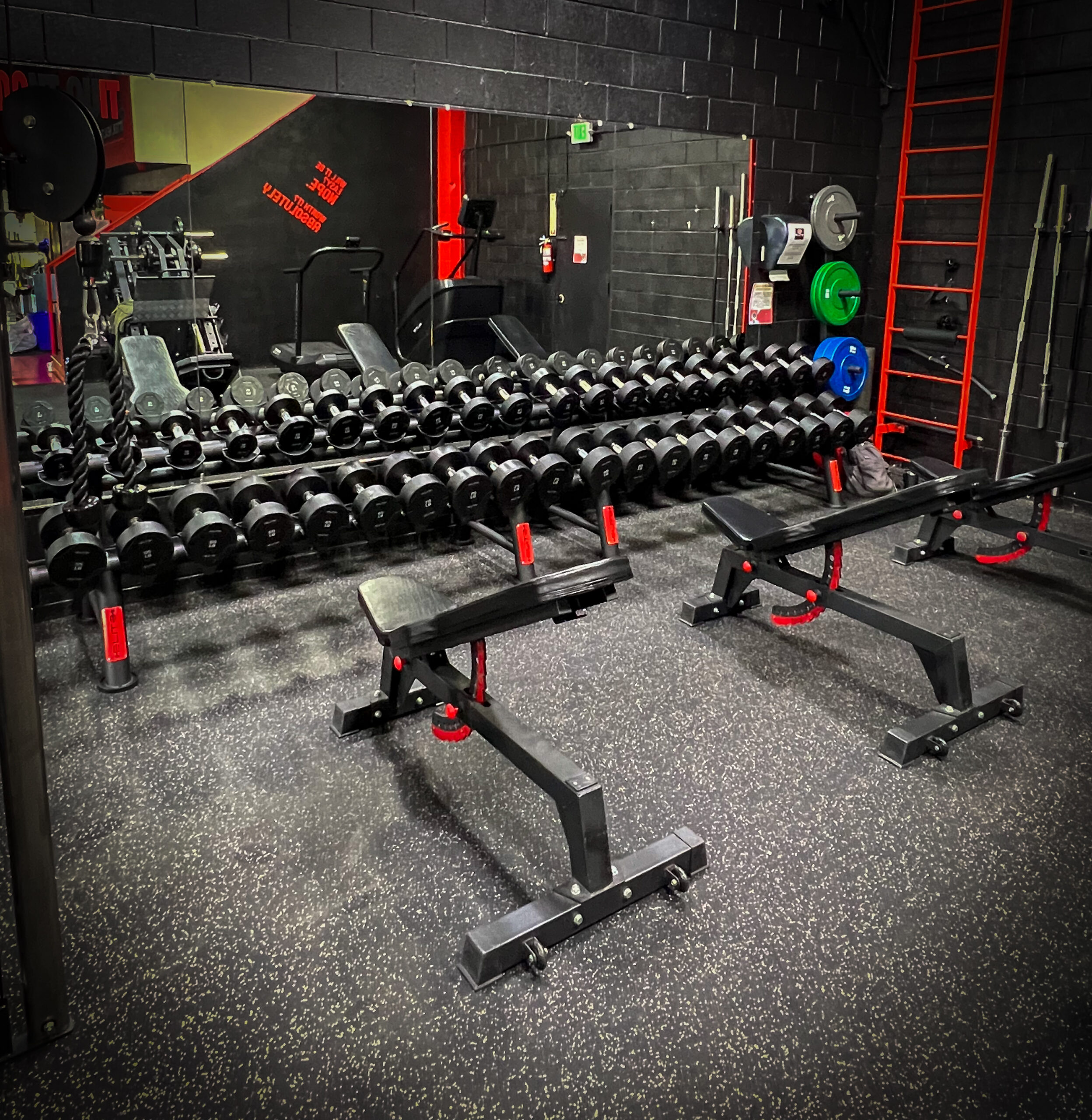
Fixed dumbbells need a rack or tray to stay organized and off the floor; adjustable sets typically ship with their own storage cradle, which is one more reason they suit smaller spaces.
7. Weight Plate Materials: Iron, Rubber and Urethane
Free weight plates typically come in a few finishes, and the difference matters for both durability and how they treat your flooring. Cast iron is the most affordable and most durable option but has no shock absorption, which means noise and vibration transfer directly to the floor beneath it. Rubber-coated plates soften impact and protect flooring at a moderate price premium. Urethane coatings go a step further, resisting cracking and holding their finish longer than rubber, typically at the highest price point of the three.
| Finish | Durability | Noise/Impact |
|---|---|---|
| Cast Iron | Very durable, can chip paint over time | No cushioning — loudest, most impact transferred to floor |
| Rubber-Coated | Good durability, coating can wear over years | Moderate cushioning, quieter than bare iron |
| Urethane | Most resistant to cracking and wear | Best cushioning, quietest option |
8. Dumbbells for Different Training Goals
The right dumbbell setup shifts slightly depending on what you're training for. Strength-focused training benefits from a heavier top-end weight range and, often, a fixed set for fast changes between working sets. Muscle-building and general fitness routines that use higher rep ranges and more exercise variety tend to get more value from an adjustable set's flexibility across a wide weight range. Circuit-style or conditioning work favors lighter, quickly adjustable weights that can change between exercises without a lot of downtime.
9. How Dumbbells Fit Into a Broader Home Gym
Dumbbells rarely stand alone in a well-planned home gym — they typically pair with an adjustable bench for pressing movements and, eventually, a rack for anyone progressing into barbell training. Starting with dumbbells and adding a bench and rack later, rather than the reverse, lets you build strength and comfort with basic movements before committing floor space and budget to larger equipment.
Read: Home Gym Equipment for Sale10. Common Dumbbell Buying Mistakes
Underbuying weight range is the most common regret — a set that feels appropriately challenging on day one is often outgrown within months of consistent training, leading to an early second purchase that a slightly higher initial investment would have avoided. Overlooking grip comfort is another: handle diameter and knurling texture affect how a dumbbell feels in the hand under load, and this varies enough between sets that it's worth testing in person when possible rather than buying on specs alone.
11. Where to Buy Dumbbells and Weight Sets
Dumbbells and weight sets are sold through the same channels as the rest of your home gym — online marketplaces, local sporting goods retailers, and sellers offloading equipment from a gym upgrade or closure. Buying online typically gives you the widest selection of adjustable and fixed sets, plate finishes and barbell weight sets in one place, while local listings can save on shipping for heavier plate orders.
Shop Free Weights12. Buying Used Dumbbells and Weight Sets
Free weights are among the safest used purchases in the entire gym equipment category, since there are effectively no moving parts to fail on a fixed dumbbell or plate. The main things worth checking are rust or corrosion on metal plates, cracking on any rubber or urethane coating, and — for adjustable sets specifically — that the dial or selector pin still locks securely at every weight setting.
Read: New vs. Used Gym EquipmentFinal Thoughts
There's no wrong answer between adjustable and fixed dumbbells — adjustable sets win on space and long-term flexibility, fixed sets win on speed between sets. Either way, buy for the weight range you'll grow into, not just where you're starting.
Frequently Asked Questions
- Are adjustable dumbbells worth it?
- For most home gyms, yes — they cover a wide weight range in one compact footprint, which is exactly what space-constrained training needs.
- How much weight should my first dumbbell set go up to?
- Buy with room to grow. A set or adjustable range that feels slightly heavy now avoids replacing it within the first year of consistent training.
- Do I need a rack to store my weights?
- Fixed dumbbells generally need a rack or tray to stay organized; most adjustable sets include their own storage cradle.
- Dumbbells or a barbell — which should I buy first?
- Dumbbells are more space-efficient and versatile for a first purchase; a barbell and plates add the ability to load much heavier weight for compound lifts as you progress.
- What's the difference between a dial and a pin-based adjustable dumbbell?
- Dial systems adjust fastest and usually include a storage tray. Pin-based systems involve manually selecting plates but often support a heavier top-end weight range.
- Are kettlebells a substitute for dumbbells?
- Not exactly — kettlebells load weight off-center, which suits swinging and ballistic movements a dumbbell handles awkwardly. They complement a dumbbell set rather than replace it.
- What should I check when buying used dumbbells or weight sets?
- Look for rust or corrosion on plates, cracking on any rubber or urethane coating, and — for adjustable sets — that the dial or selector pin locks securely at every weight setting.
- What's the difference between rubber and urethane weight plates?
- Both cushion impact and protect flooring better than bare cast iron. Urethane generally resists cracking and holds its finish longer than rubber, typically at a higher price point.
- Should I buy a heavier or lighter dumbbell set for muscle building?
- Muscle-building routines that use higher rep ranges and varied exercises tend to benefit most from an adjustable set's wide weight range, rather than committing to one fixed heavy pair.
- What should I pair with dumbbells to build out a home gym?
- An adjustable bench for pressing movements is the natural first pairing, with a rack added later for anyone progressing into barbell training — starting with dumbbells lets you build comfort with basic movements first.
- How do I avoid buying the wrong dumbbell weight range?
- Buy for where you expect to be in six months rather than just where you're starting — a set that already feels appropriately challenging on day one is often outgrown within months of consistent training.
- Does handle grip matter when choosing dumbbells?
- Yes — handle diameter and knurling texture affect how a dumbbell feels under load, and this varies enough between sets that it's worth testing in person when possible rather than buying on specs alone.
- Are cast iron plates worth the lower price over rubber or urethane?
- They're more affordable and very durable, but offer no cushioning, so noise and vibration transfer directly to the floor — a real consideration for shared buildings or upstairs rooms.
- How many dumbbell pairs do I need if I buy fixed weights instead of adjustable?
- Enough to cover a meaningful progression range for your main lifts — this typically means several pairs spanning light to heavy, which is exactly the storage and cost trade-off that makes adjustable sets appealing.
- Can dumbbells alone replace a full home gym?
- For many training goals, yes — a solid dumbbell set paired with an adjustable bench covers a wide range of exercises, though a rack adds barbell-specific lifts that dumbbells alone can't fully replicate.
- Where can I buy dumbbells or weight sets?
- The same channels as the rest of your home gym — online marketplaces offer the widest selection of adjustable and fixed sets, while local listings and sellers offloading equipment from a gym upgrade can save on shipping for heavier plate orders.
- What's typically included in a barbell weight set?
- A barbell paired with a set of plates sized to load it, sold together as a bundle rather than buying the bar and plates separately — check the specific listing for the exact bar and plate combination included.
- Is buying used dumbbells or weights near me a good deal?
- Often, yes — free weights have effectively no moving parts to fail, so a used set in good condition (no rust, cracked coating, or a loose adjustable pin) is a low-risk way to save over buying new.
Shop Related Equipment
Ready to Shop Free Weights?
Browse dumbbells, barbells and weight sets for every home gym.