
Overhead Press Form Guide
The overhead press builds strong shoulders and a solid core. Here's how to press with good form.
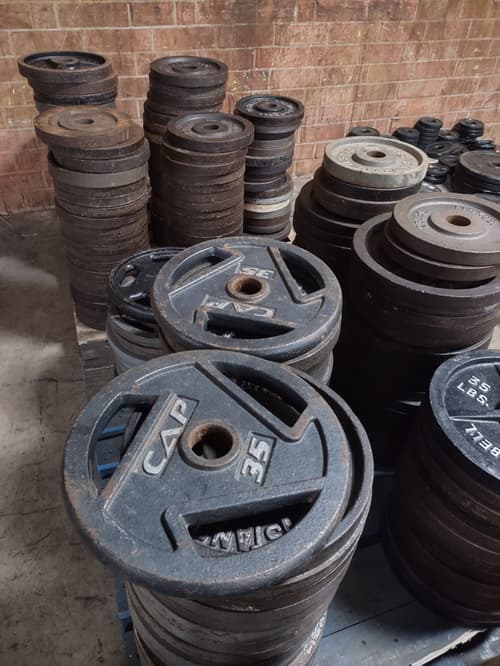
Free Weights for Sale
1. Standing Shoulder Press Setup
- Set the bar in the rack at upper-chest height
- Grip just outside shoulder-width, wrists stacked over elbows
- Unrack with the bar resting on your front delts
- Feet hip-width, glutes and abs tight
2. The Press
- Take a breath and brace
- Move your head back slightly and press the bar straight up
- Once the bar passes your forehead, bring your head through
- Lock out with the bar over your mid-foot and shoulders shrugged up slightly
- Lower back to your shoulders under control
3. Press Variations
| Variation | Description |
|---|---|
| Military press | Strict press with feet together or close |
| Standing overhead press | Strict press, hip-width stance |
| Push press | Small leg dip and drive to move more weight |
| Seated dumbbell press | More stability, less core demand |
| Landmine press | Shoulder-friendly angled press |
4. Common Mistakes
- Leaning back excessively; squeeze glutes and abs
- Pressing the bar forward around the face
- Flared elbows at the start
- Not locking out fully overhead
5. Overhead Press Accessories
Strengthen your press with dumbbell shoulder presses, lateral raises, triceps extensions, face pulls and push presses. A strong upper back and triceps help you lock out heavier weights. Core work like planks and anti-extension exercises keeps your torso stable during standing presses.
6. How Often to Press
Most lifters overhead press one to two times a week, alternating heavier days of 3 to 5 reps with lighter days of 8 to 12 reps.
7. Seated vs Standing Overhead Press
The standing press trains the shoulders, triceps and core together, since your whole body must stabilize the bar. The seated press with back support reduces core demand and lets you focus on the shoulders, often allowing slightly heavier loads for higher reps. Use standing presses as your main lift and seated presses as an accessory.
Dumbbell versions of both allow a more natural shoulder path and help correct imbalances.
8. Shoulder Mobility for Pressing
If you struggle to press overhead without arching your back, improve thoracic spine and shoulder mobility with wall slides, foam rolling the upper back and lat stretches.
9. Overhead Press Muscles Worked
The overhead press primarily trains the front and side delts, triceps and upper chest. The upper traps help lock out the bar overhead, and the core, glutes and legs stabilize the body during standing presses. Strong overhead pressing improves shoulder strength, stability and overall upper-body power.
10. Overhead Press Progression
The overhead press progresses more slowly than squats or bench presses. Use small increments of 2.5 to 5 lb, or microplates, and be patient. Adding reps before adding weight is another effective way to keep progressing.
Final Thoughts
Great overhead press form means a tight core, stacked wrists, a vertical bar path and a full lockout overhead. Start light, progress in small jumps and use dumbbell or landmine variations if barbell pressing bothers your shoulders.
Frequently Asked Questions
- Is the overhead press bad for shoulders?
- Not with good technique and sensible loads. Use landmine presses if overhead pressing hurts.
- Military press vs overhead press?
- They're nearly the same; military press traditionally uses a narrower stance.
Shop Related Equipment
Get the Right Weights
Shop barbells, dumbbells, kettlebells and plates.