
Best Stretching Equipment for Flexibility
Straps, wedges, balls and machines can help you stretch deeper and more consistently. Here's what's worth buying.
Stretching and Recovery
1. Best Stretching and Mobility Tools
| Tool | Use | Approx. Price |
|---|---|---|
| Stretch strap with loops | Hamstrings, shoulders, quads | $10 - $25 |
| Yoga blocks | Support and deeper poses | $10 - $30 |
| Slant board | Calves and ankle mobility | $25 - $80 |
| Massage / lacrosse ball | Feet, glutes, upper back | $5 - $20 |
| Leg stretcher | Splits and hip flexibility | $20 - $150 |
| Stretching machine / cage | Guided full-body stretching | $300 - $3,000 |
2. How to Use a Stretch Strap
- Lie on your back and loop the strap around one foot
- Straighten the leg toward the ceiling until you feel a stretch
- Hold 30 to 60 seconds while breathing slowly
- Repeat 2 to 3 times per side
3. Build a Simple Mobility Routine
Ten minutes a day beats an hour once a week. Pair a strap, a ball and a slant board with a short routine for hips, hamstrings, calves and shoulders after workouts or before bed.
Shop Recovery Tools4. Stretching vs Mobility Work
Static stretching holds a position to improve flexibility, while mobility work uses active movements to improve control through a range of motion. Both are useful. Many people use dynamic mobility drills before workouts and static stretching afterward or before bed. Tools like straps, blocks and balls support both.
5. Simple Daily Routine
Spend 10 minutes daily: hamstring stretch with a strap, hip flexor stretch, calf stretch on a slant board, upper back roll on a ball and a doorway chest stretch. Consistency builds lasting flexibility.
6. Stretching Machines and Cages
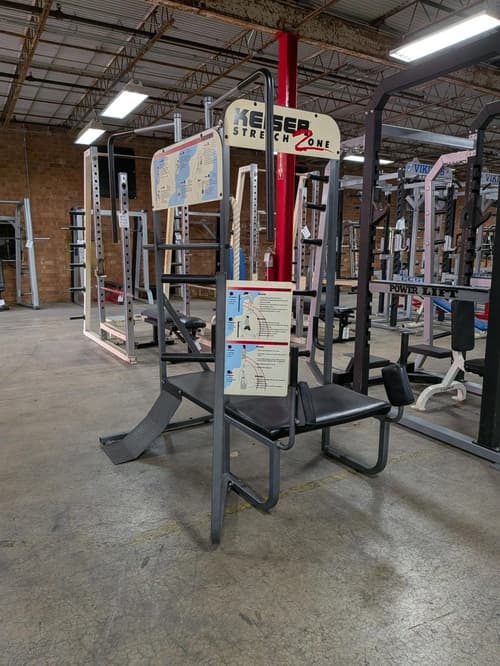
Stretching machines guide you into supported positions for hamstrings, hips and back, making stretching easier for people with limited flexibility or mobility. Commercial gyms often use stretching cages with multiple handles and steps. They're expensive for home use, but some compact models suit dedicated home gyms.
For most people, simple tools deliver similar benefits at a much lower cost.
7. Who Benefits Most From Stretching Tools
Desk workers, lifters with tight hips and hamstrings, runners and older adults all benefit from regular stretching with simple tools.
8. Stretching Safety
Stretch to a point of mild tension, never pain, and breathe slowly throughout. Avoid bouncing in static stretches. Warm up with light movement before deep stretching, and be especially gentle after injuries. If a stretch causes numbness, tingling or sharp pain, stop and consult a professional. Progress gradually over weeks rather than forcing range of motion in a single session.
9. Our Recommendation
Start with a strap, blocks and a massage ball; together they cost little and cover most needs.
10. Making Stretching a Habit
Keep your tools visible near your training space or TV so short stretching sessions become automatic.
Final Thoughts
The best stretching equipment is simple: a strap, blocks, a ball and a slant board cover most needs for very little money. Stretching machines suit gyms and dedicated users. Consistency matters more than any tool.
Frequently Asked Questions
- Do stretch straps help flexibility?
- Yes. They help you hold stretches longer and with better positioning.
- How often should I stretch?
- Daily short sessions or at least 2 to 3 times a week produce steady improvements.
Shop Related Equipment
Move Better
Shop stretching and mobility equipment.