
Free Tool
One-Rep Max Calculator
Enter the weight and reps from a hard set to estimate the most you could lift for a single rep — then use the chart to set your training weights.
Units
Estimated one-rep max
214 lb
Average of three formulas
- Epley
- 216 lb
- Brzycki
- 208 lb
- Lombardi
- 217 lb
| % of 1RM | Weight | Approx. reps |
|---|---|---|
| 100% | 214 lb | 1 |
| 95% | 203 lb | 2 |
| 90% | 192 lb | 3 |
| 85% | 182 lb | 5 |
| 80% | 171 lb | 8 |
| 75% | 160 lb | 10 |
| 70% | 150 lb | 13 |
| 65% | 139 lb | 16 |
| 60% | 128 lb | 20 |
| 55% | 118 lb | 25 |
| 50% | 107 lb | 30 |
How the estimate works
The calculator applies three well-established strength formulas — Epley, Brzycki and Lombardi — to the set you enter and averages them. Use a set you took close to failure with good form; an easy set of 5 will underestimate your max.
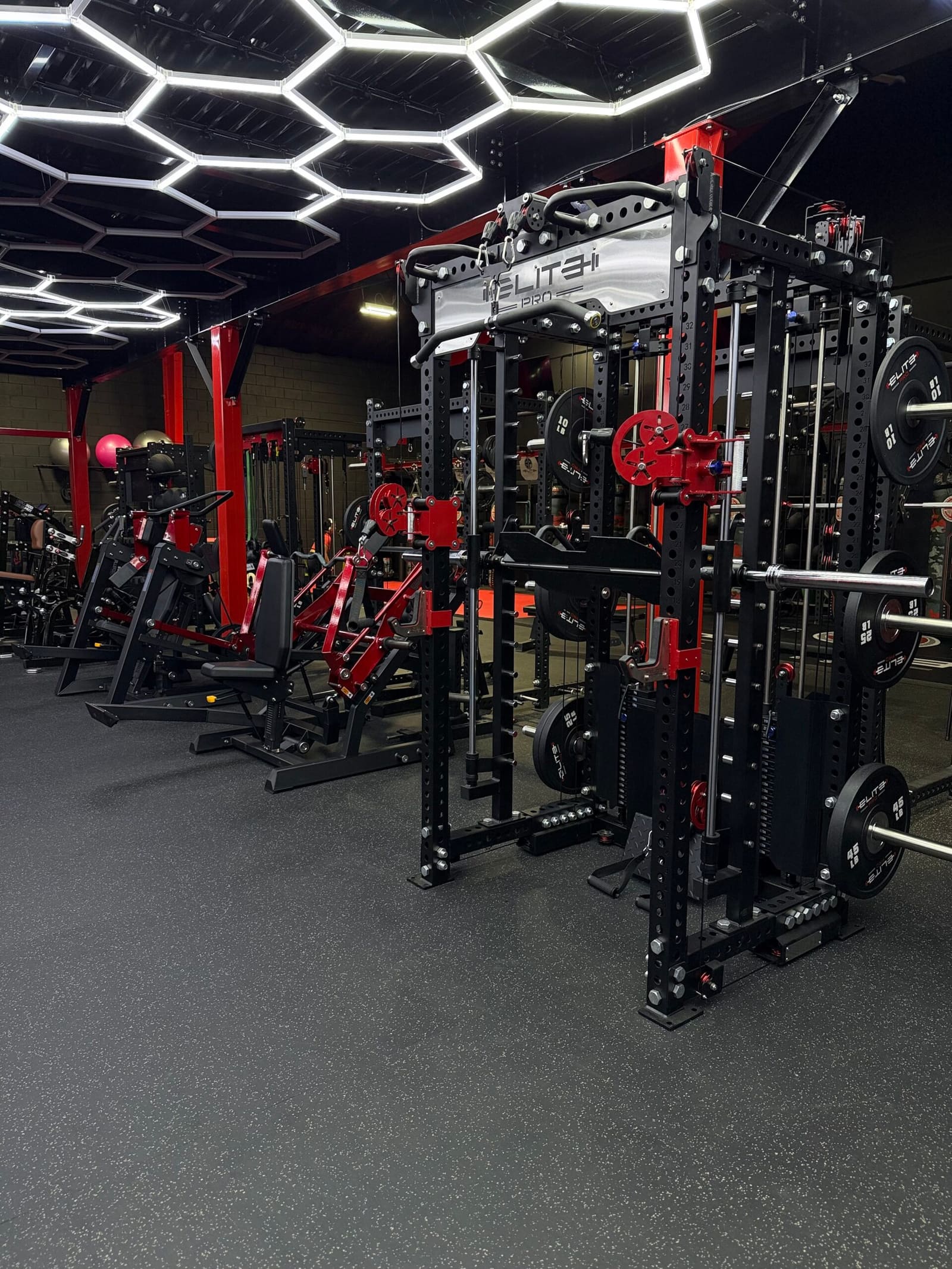
Training at home? A sturdy power rack with safety arms makes heavy sets far safer when you train without a spotter.
Share this tool
Free to use and free to recommend. To link to it from your site, blog or forum post, copy this snippet:
<a href="https://gymequipmentmarketplace.com/tools/one-rep-max-calculator">One-Rep Max Calculator</a> – Gym Equipment MarketplaceFrequently Asked Questions
- How accurate is a one-rep max calculator?
- Estimates are most accurate from sets of 2–6 reps taken close to failure, typically landing within about 5% of a tested max. Accuracy drops above 10 reps because endurance starts to matter more than maximal strength.
- Which 1RM formula is best?
- No single formula wins for every lifter or lift. Epley tends to read slightly high at higher reps and Brzycki slightly low, so this calculator shows each one and uses their average as the headline estimate.
- Is it safe to test a true one-rep max?
- Testing a true max carries more injury risk than an estimate, especially without a spotter or safety arms. For most training purposes an estimated 1RM is enough to set working weights. If you do test, warm up thoroughly and lift inside a rack with safeties set.
- How do I use the percentage chart?
- Most programs prescribe working sets as a percentage of 1RM — for example 3×5 at 80%. Find the percentage in the chart to get the weight, then round to the nearest load your plates allow.
More free tools
Home Gym Cost CalculatorPick your equipment and quality tier to estimate what a home gym will cost, new or used.Gym Space CalculatorCheck whether your equipment fits a room, including the safety clearance each piece needs.Barbell Plate CalculatorEnter a target weight and see exactly which plates to load on each side of the bar.Used Gym Equipment Price IndexLive median prices for used gym equipment by type and brand.